
Why ERP Integration Is Critical for Operational Visibility
Table of Contents

When a shipment is delayed, inventory figures do not match, or an order remains unfulfilled despite appearing complete in the system, the problem is not always a lack of innovation. Often, it is a lack of technology integration that a business already uses.
For global manufacturers, distributors, third-party logistics (3PL) providers, and freight brokers, operational visibility is a non-negotiable parameter to managing costs, meeting customer expectations, and responding to sudden disruptions. Yet crucial information can remain scattered across critical operational platforms, like enterprise resource planning (ERP), warehouse management systems (WMS), transportation management systems (TMS), electronic data interchange (EDI) platforms, and other platforms.
This is where ERP system integration becomes a competitive priority. By connecting business applications and operational workflows, organizations can create a more consistent real-time view of inventory, orders, shipments, costs, and fulfillment performance. The result is better-informed decision-making, fewer manual involvement, and greater control of daily operations.
For logistics-driven businesses, ERP integration for better workflow automation is a practical step toward making the entire operation more connected, seamless, and accountable.
What Is ERP System Integration and Why Does It Matter?
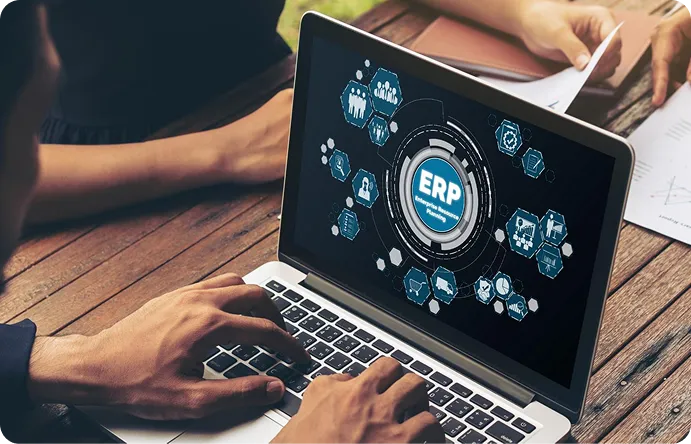
ERP integration connects an enterprise resource planning system with other business applications so that relevant business information can move seamlessly and accurately between them, enhancing both efficiency and productivity.
An ERP platform typically manages core business functions such as purchasing, financials, inventory records, order processing, and reporting. However, logistics and supply chain operations often depend on specialized systems that handle tasks in greater operational detail.
For example, a warehouse may use a WMS to manage picking and packing, while a TMS coordinates freight movements and an EDI platform exchanges transaction documents with customers and suppliers. Without effective integration, employees may need to gather information manually across these applications, which is time-consuming and often leads to erroneous outcomes. This is exactly what ERP system integration solves by bridging those gaps and helping establish connected workflows to gain a transparent picture of what is happening.
The objective is not necessarily to replace existing systems, but to make the technology ecosystem work together in support of measurable business outcomes.
What Operational Visibility Actually Means in Logistics
Operational visibility in logistics primarily centers on three questions at any moment: where is the inventory, what is the status of each order, and what will it cost if something changes?. The concerns are mainly around the status of the inventory, every order, and applicable recurring costs if something changes. Most logistics teams can answer only one or two, while a few can answer all three without opening multiple screens and exporting a spreadsheet.
The current market is competitively moving toward real-time answers. An IDC finding, reported in a 2026 enterprise integration review, indicates that more than half of enterprises (54%) now prioritize real-time data exchange over batch processing. GS1 US adds that companies using real-time tracking technologies are 68% more likely to report improved visibility and better inventory control. Visibility, in other words, is largely a data-flow problem before becoming a dashboard problem.
7 Benefits of ERP Integration for Operational Visibility
1. A Unified Record Across Every Team
ERP system integration connects inventory, orders, finance, and shipping data into one trusted record. Teams stop debating whose spreadsheet is right and start acting on the same numbers. For logistics operators, that shared view means faster decisions, fewer reconciliation errors, and clearer accountability from the warehouse floor to the finance desk.
2. Real-Time Inventory and Order Tracking
The right ERP integration solutions sync warehouse, transportation, and sales systems continuously instead of overnight. Planners see stock levels, order status, and shipment exceptions as they happen. That reduces stockouts, overselling, and surprise delays, and it lets customer service answer status questions in seconds rather than chasing updates across multiple screens and email threads.
3. Fewer Manual Entries, Fewer Errors
ERP software integration replaces re-keying and copy-paste handoffs with automated data exchange through APIs and EDI. Fewer manual touchpoints mean fewer mismatched invoices, wrong quantities, and delayed updates. The main advantage of cleaner data is that it makes every report more trustworthy, assisting managers in spending time evaluating performance instead of hawk-eye verifying, thereby investing time in improving productivity.
4. Faster, Better-Informed Decisions
Leaders can’t act on data they can’t trust or find. ERP integration gives your dashboards real-time information, so your team can catch demand swings, carrier delays and cost spikes early instead of finding out after the damage is done. Instead of reacting after a missed delivery, teams can reroute, reallocate inventory or adjust pricing while there is still time to protect margin and service levels.
5. Visibility That Triggers Automated Action
ERP integration for better workflow automation turns visibility into action. A confirmed order can trigger inventory allocation, carrier booking, and shipment notices automatically, with people stepping in only for exceptions. Bottlenecks appear early because every step is logged, thereby minimizing cycle times and giving operations leaders a clear picture of the lagging areas.
6. Scalable Visibility for Growing Teams
ERP integration for small and medium businesses keeps your systems growing as fast as your sales. Start small by connecting orders and inventory, and you get a clear, real-time view without rebuilding everything. When you add a new sales channel, carrier, or warehouse, it seamlessly joins the same system instead of becoming one more tool to juggle.
7. Lasting Results Through Planned Implementation
Experienced ERP implementation services build reliable visibility into the project from day one by mapping processes, assigning data ownership, and testing real exceptions. That planning reduces the risk of costly rework after go-live. Ongoing monitoring then keeps integrations healthy as carrier requirements, trading partners, and business rules inevitably change over time.
What to Look for in ERP Integration Solutions
When looking for ERP integration solutions for your business, consider evaluating the following parameters before signing the deal:
- Does the provider understand logistics workflows, or only generic data mapping?
- Is the approach consultative, starting with diagnosis of current systems, or solutions-first?
- Can it support EDI, API, and legacy connections side by side?
- How are security, access, and data quality governed?
- What happens after launch? Continuous monitoring and support determine whether visibility lasts.
Evaluating the above parameters before integration helps organizations prioritize the right approach and avoid operational bottlenecks.

Looking Forward: Turning Connected Systems into a Competitive Advantage
Operational visibility is not a reporting upgrade. It is the result of systems that talk to each other accurately and on time, every time. In a market where nearly every organization is buying new technology, the advantage goes to those who connect it.
If your teams are still reconciling data by hand, then it’s time to adopt a practical approach to reap the desirable outcomes. This is why a consultancy-first approach is essential to understanding and evaluating the existing operational gaps before suggesting the best strategy and technology solutions. Connect with an experienced logistics technology partner who evaluates existing systems, identifies integration priorities, and develops a practical roadmap for implementation and continuous improvement.
Frequently Asked Questions
What is ERP integration?
ERP integration is the process of connecting an ERP system with other business applications, such as WMS, TMS, CRM, e-commerce, and EDI platforms, so data flows automatically between them instead of being entered manually.
How does ERP integration improve operational visibility?
It enables every team to access the same real-time data on inventory, orders, and shipment status. This reduces reporting delays and conflicting records, and it lets teams spot exceptions earlier.
Is ERP integration worth it for small and medium-sized businesses?
Yes, particularly as SMBs scale by adding sales channels, carriers, and the latest innovation. Integrating in phases, starting with the highest-friction workflow, keeps cost and disruption manageable while delivering measurable gains.
How long does ERP software integration take?
It depends on scope, the number of systems, and data quality. A focused integration, such as ERP to WMS, may take weeks, while a full multi-system program can take several months. A diagnostic phase up front gives the most reliable estimate.
Recent Blogs

Common ERP Integration Challenges and How to Avoid Them